
Pleta de Molières Peatland

Pleta dels Molières is a valley-bottom peatland located in the SCI Aigüestortes, part of the European Natura 2000 network, in the central Pyrenees, near Vielha (Val d’Aran, Catalonia, 42.62ºN, 0.74ºE; 1,720 m a.s.l.). The peatland develops under acidic soil conditions (pH ~4.5–5.5), which shape a mosaic of habitats that includes heather (Erica tetralix) and Sphagnum hummocks, rheophilous fens dominated by Trichophorum, and acid fens with Carex nigra. It represents one of the most characteristic examples of peat-forming acidic wetlands in the region.
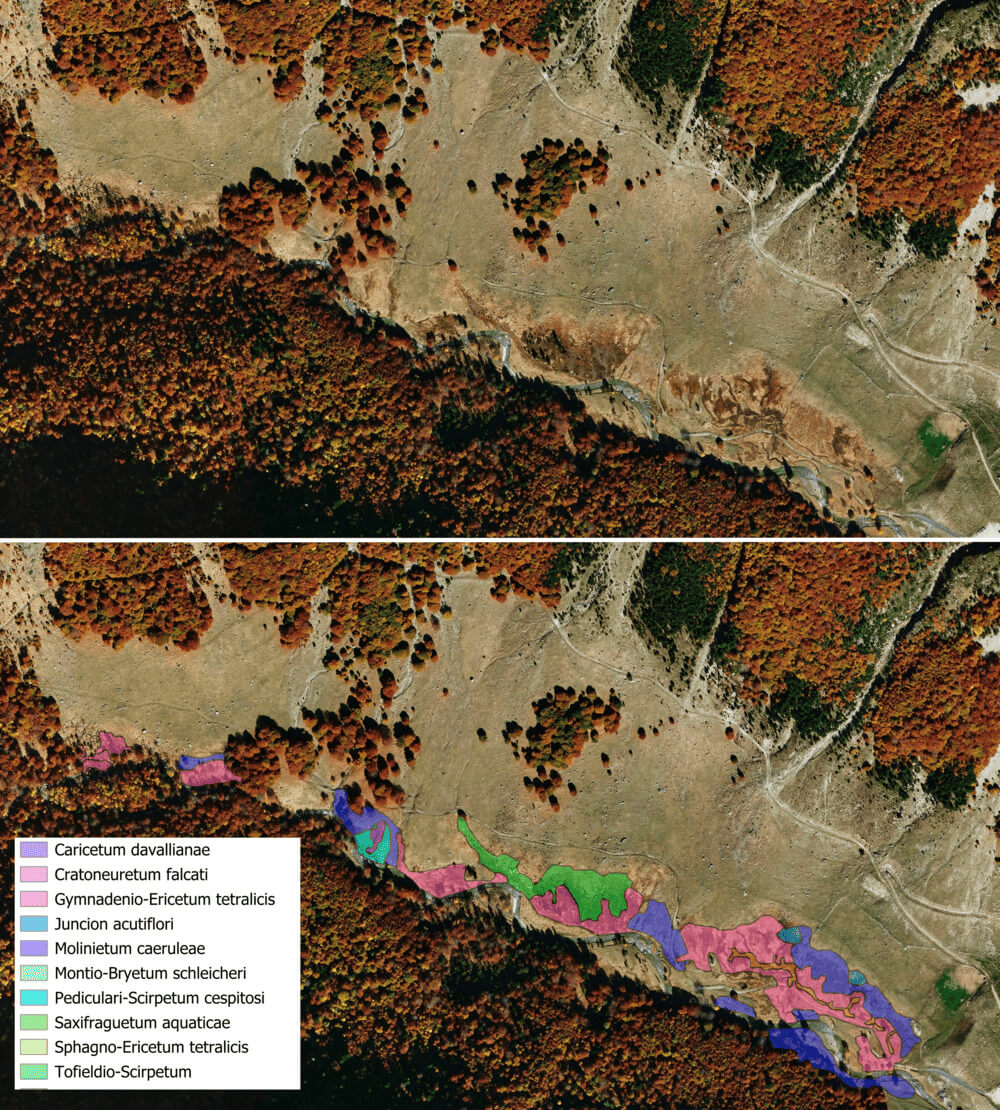
Aereal view of the Pleta de Molières Peatland, with the different habitats coloured according to the legend

The climate is temperate mountain, with mean annual temperatures around 6–7 °C and annual precipitation between 1,200–1,600 mm. Precipitation falls predominantly as rain (≈70–85%), with snow accounting for roughly 15–30% of annual totals. Snowfall is concentrated in the winter months, where it contributes to seasonal snow cover and plays a key role in soil moisture recharge and early spring runoff, despite not being the dominant form of precipitation.
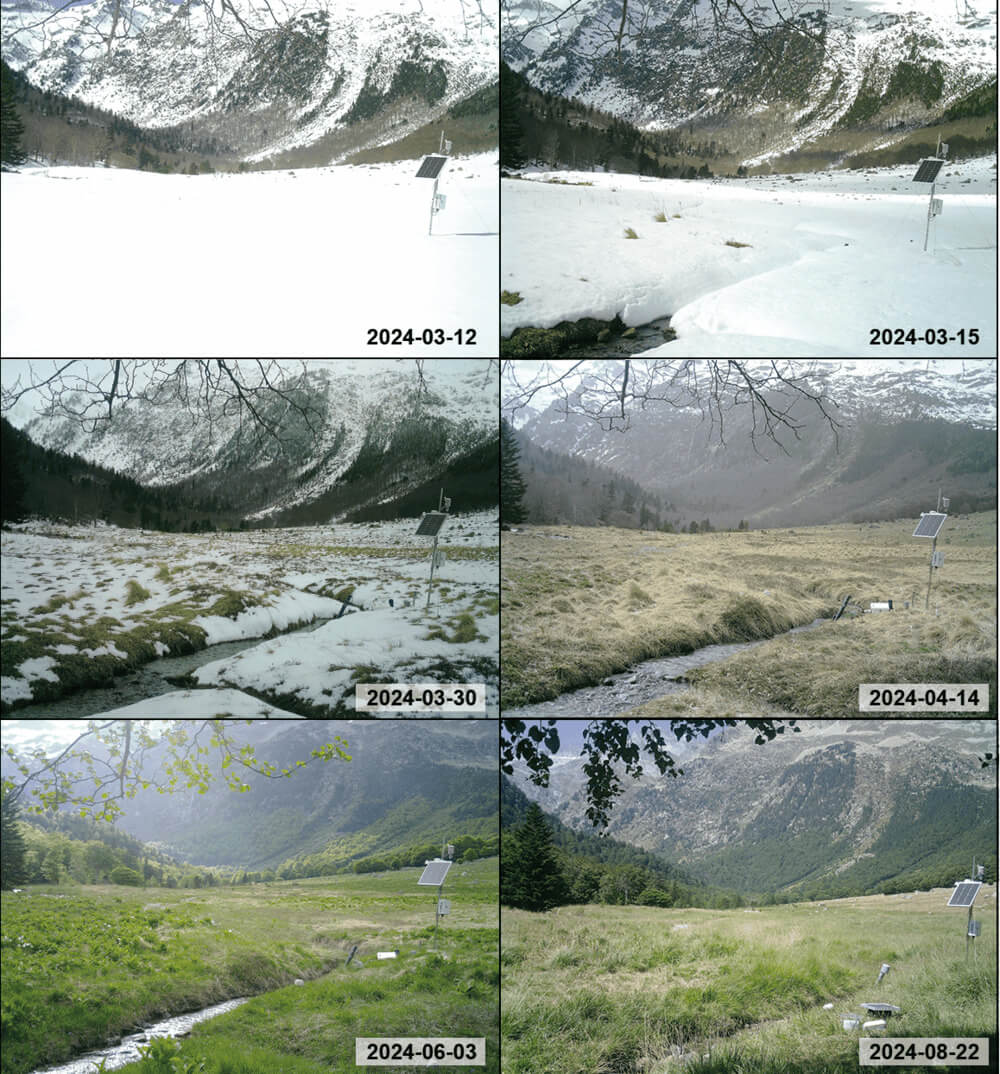
Seasonal progression at the Pleta de Molières Peatland site

The site lies on granite substrates and is hydrologically connected to headwater streams, creating strong links between soils, groundwater, and surface waters. These connections regulate how carbon and nutrients are stored, transformed, and released, while also influencing the mobility of minor elements such as phosphorus, iron, and silica. During wetter periods, organic matter and nutrients can be flushed out, contributing to export fluxes of dissolved carbon and nitrogen to downstream waters. This makes Pleta dels Molières a valuable site for studying how peatlands mediate elemental cycles and their impacts on water quality in mountain ecosystems, and for understanding how environmental changes may alter these processes.

Pyrenees Lake District

The Pyrenees Lake District, with over a thousand alpine lakes spanning diverse geological and climatic zones, is one of Europe’s richest mountain lake regions. Its varied conditions make it a natural laboratory for studying how environmental and human factors shape alpine ecosystems. LOOP has surveyed these lakes since 1987, building a database of over 500 sites to track long-term ecological changes.
LEARN MORE

Aigüestortes i Estany de Sant Maurici National Park

The Aigüestortes i Estany de Sant Maurici National Park, the only national park in Catalonia, is one of the best-preserved alpine ecosystems in the Iberian Peninsula, with over 200 lakes and great biodiversity. LOOP has conducted long-term ecological research there since 2004, focusing on the Sant Nicolau Valley—an experimental site for studying hydrology, biogeochemistry, and climate change impacts in high-mountain environments through advanced sensor networks and water monitoring programmes.
LEARN MORE

Lake Redon

Lake Redon (formerly called Redó) has been the main research site of LOOP since 1984 and is one of the most studied alpine lakes in the world. Located in the Pyrenees at 2240 m altitude, it has been continuously monitored for nearly 30 years, with extensive studies on its limnology, climate interactions, and environmental changes. Research there has advanced understanding of global change, pollution, and ecosystem dynamics over the past 10,000 years.
LEARN MORE
This site is registered on wpml.org as a development site. Switch to a production site key to remove this banner.