Atmospheric fluxes are an important component of the global cycle of many elements. These fluxes are often caused by long-range transport of elements from distant emission sources to receptor areas, where they are scavenged by precipitation and deposited on land or ocean. In each environment, the atmospherically deposited elements may have an important effect on biogeochemical cycling in the existing ecosystems.
Atmospheric long-range transport takes place in the free atmosphere above the mixing boundary layer, which generally has a depth of 1,000-1,500 m. The chemistry of the free atmosphere can be thus considered to reflect the composition of the global atmosphere better than the boundary layer below it. High mountains protrude above the boundary layer, intercepting the global flux of elements. Therefore, high elevation stations are one of the best settings to monitor the long-range (i.e. regional and global) transport of chemical elements. In addition, high mountains are usually free of direct local impacts that could mask global background signals.
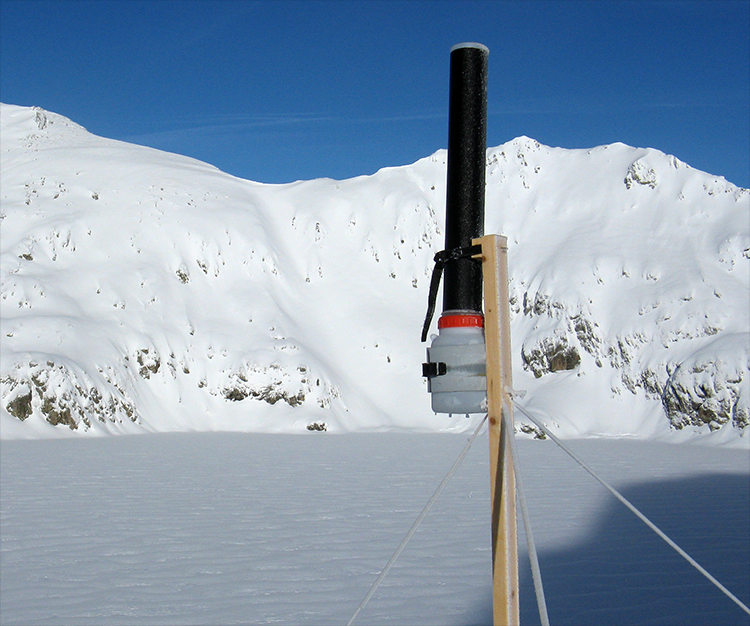
In the lake Redon station we have been monitoring the deposition of trace elements since 2004. Here we analyse the time series of data in order to determine the variation in deposition over the past decade, and to examine in detail the influence of climate and the changes in anthropogenic emissions on the trends detected.
Trace element deposition did not show a simple trend. Rather, there was statistical evidence of several underlying factors governing the variability of the time-series recorded: seasonal cycles, trends, the effects of the amount of precipitation, climate-controlled export of dust, and changes in anthropogenic emissions.
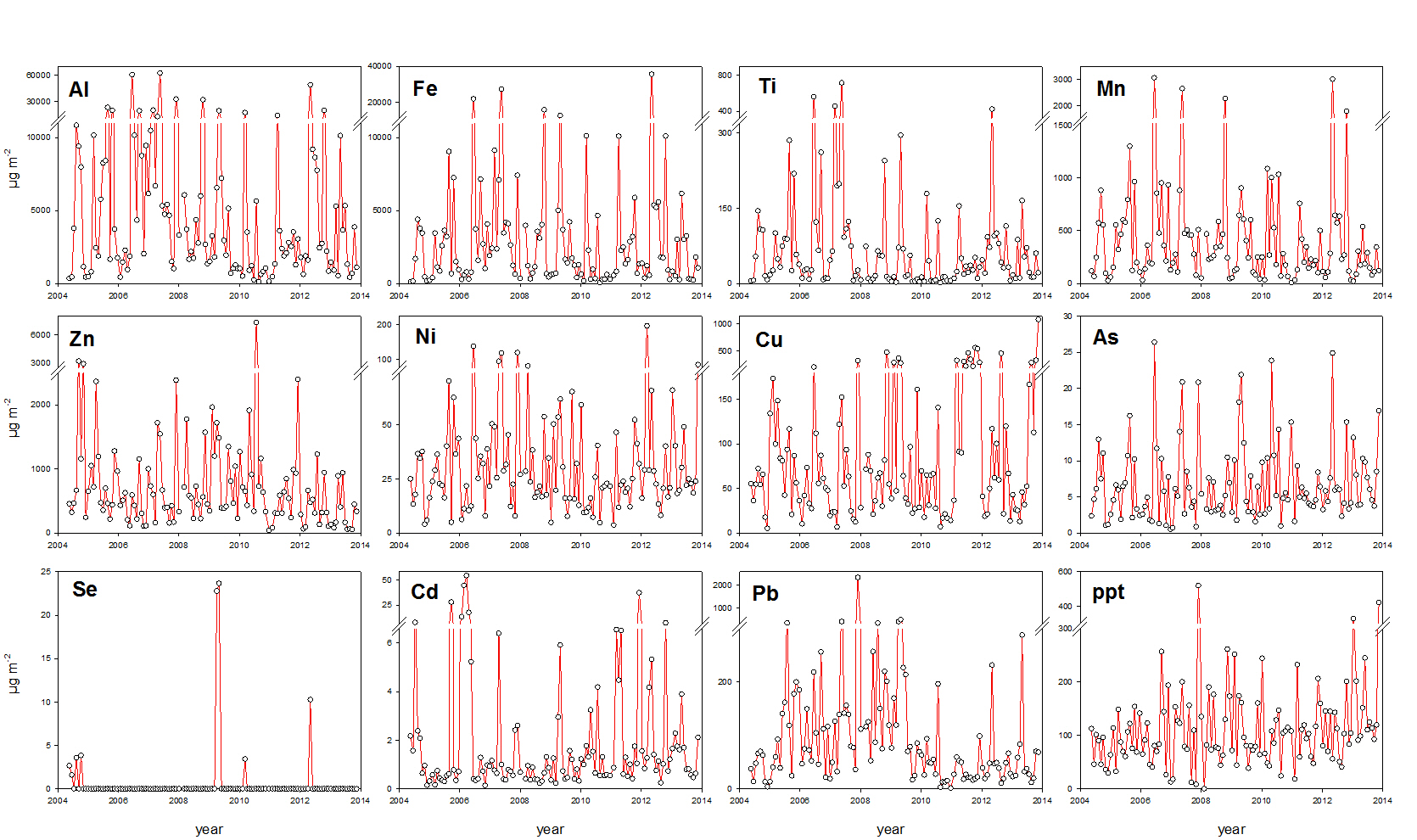
However, we identified three main modes of variation. To do so, we applied a Factor Analysis (FA) to our data. FA is a multivariate statistical method used to describe variability among observed, correlated variables in terms of a potentially lower number of unobserved variables called factors, which are uncorrelated with each other. The results of FA were that the elements analysed can be represented by three factors. The first factor (F1) included the crustal elements (Al, Fe, Ti, Mn) and Pb. The second factor (F2) included precipitation volume, Ni, As and Cu (though the latter with a weak loading). Finally, the third factor (F3) included Zn, and two elements that also loaded on the first factor: Mn and Pb.
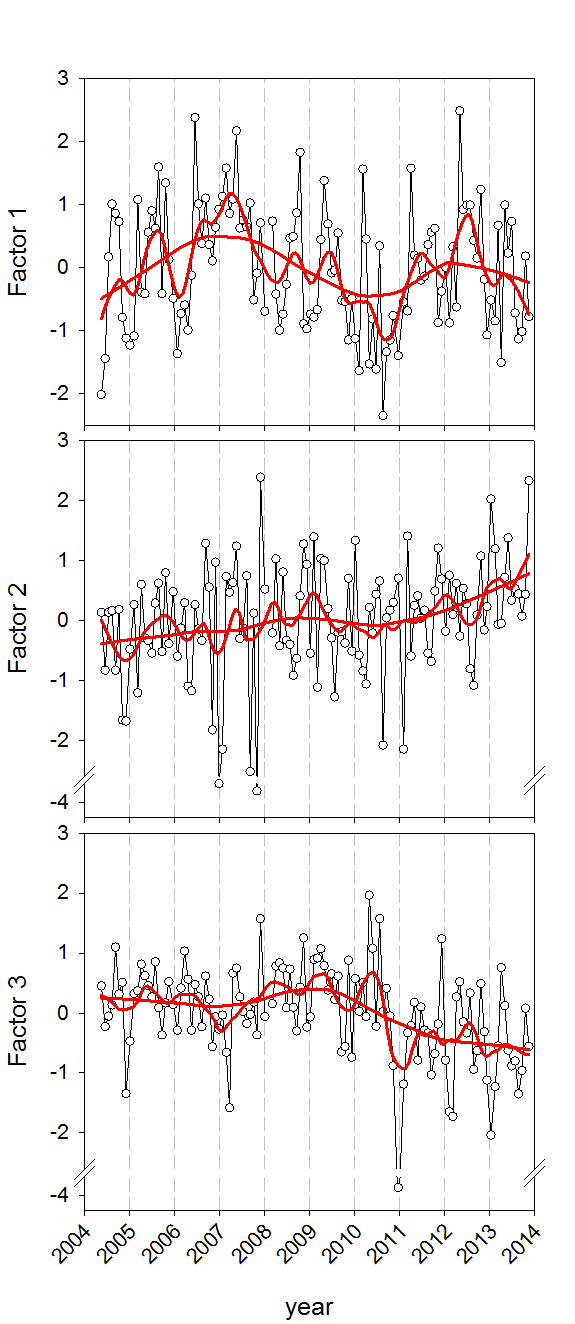
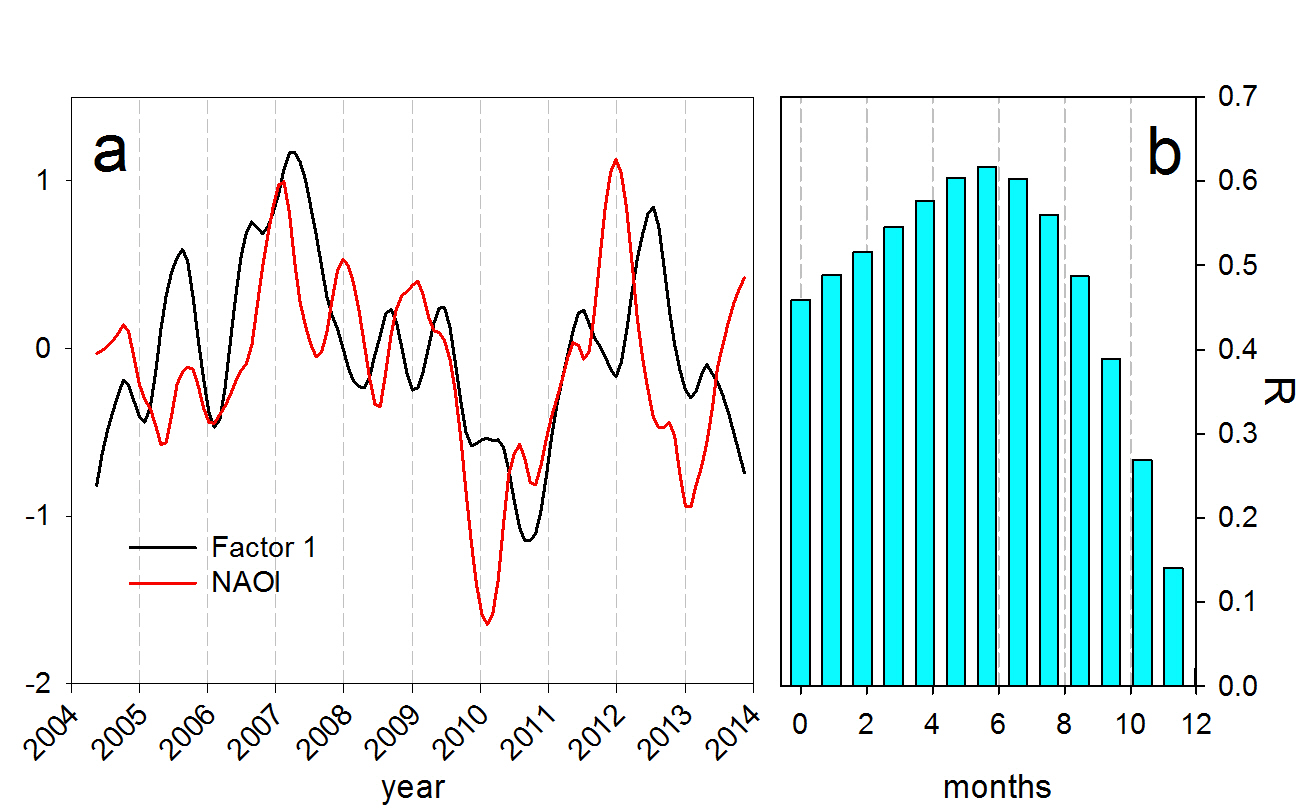
Each factor showed a different pattern of variation over time: F1 showed an apparently cyclic fluctuation, with cycles of c. 8 years. F2 showed a steady upward trend. F3 showed constant values up to mid 2009 and then a downward trend, which was sharper at the beginning than in the final years. On the basis of these results we concluded that:
1) Deposition of crustal elements and Pb followed the variation in NAO. Under a positive NAO, drier conditions in North Africa may favor the entrainment of dust into the atmosphere and thus increase the transport of associated elements. Our data showed a fluctuation that could fit the ~8-year cycle described for NAO. Deposition responded to NAO fluctuation with a six-month delay
2) Deposition of Ni, As and Cu followed an upward trend in precipitation. The increase in precipitation over time was caused by a larger number of events rather than by more copious events. A higher frequency, rather than a greater intensity of events may lead to increased scavenging of these elements from the atmosphere by precipitation. In order to reflect the change in precipitation, the atmospheric fluxes of the elements of concern had to be fairly constant. Otherwise, marked variations in atmospheric supply (such as those caused by NAO, or by changing pollutant emission rates) would override the effect of precipitation.
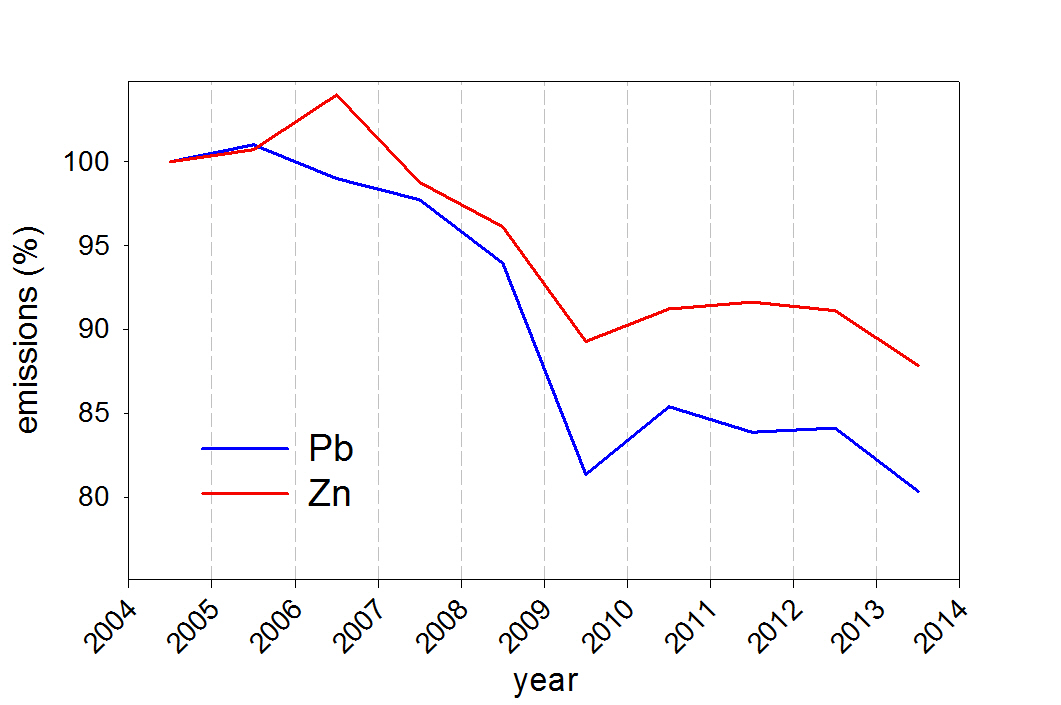
3) Deposition of Pb and Zn (and Mn to a lower degree) followed the urban and industrial emissions in Europe and North America with a delay of about 1-2 years. The most important feature was a pronounced decline in emissions that started ca. 2007-2008 (with the global financial crisis and the subsequent Great Recession), and was followed by a decline in deposition starting in 2009.
As a whole, background deposition of trace elements appeared to be a complex process, driven not by a single underlying factor but by a combination, including climatic as well as anthropogenic factors.