
- La Vanguardia
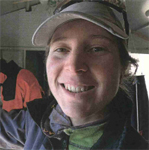
Los Pirineos no se escapan a la polución
An indicator of pollution: the researcher Montse Bacardit has discovered that the almost inaccesible mountain lakes of the Central Pyrenees and their catchments are polluted by a suite of metals potentially toxic to the ecosystem. Montse Bacardit is graduated in Biology by the University of Barcelona. In her Ph.D. Thesis she has studied the pollution in high mountain catchments.
- La Mañana
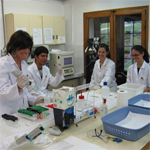
Ribagorça Romànica becará estudiantes para analizar 550 lagos
The Association Ribagorça Romànica will award 6 undergraduated and graduated students in biology and environmental sciences with grants to participate in the NITROPIR project. The students will collaborate in the synoptic survey that the LOOP will carry out in 500 Pyrenean lakes in order to analyse the changes produced in the water chemistry by the human N emissions.
- El Mundo / El País / Segre
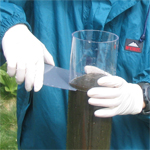
Los expertos detectan residuos de contaminación urbana en diversos lagos aislados de los Pirineos. El CSIC detecta contaminación urbana en lagos del Pirineo.
Several newspapers reported the last findings of LOOP regarding the long-range trace metal contamination detected in the Pyrenees: "The experts detect traces of urban contamination in several isolated lakes in the Pyrenees" (El Mundo); "The CSIC detects urban contamination in Pyrenean lakes" (El País, Segre).
- Diari de Girona
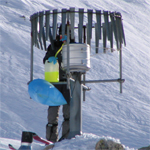
Els estanys de muntanya, un indicador de la contaminació de l’home
In her Ph.D. Thesis presented at the University of Girona, the LOOP's researcher Montserrat Bacardit shows how remote mountain areas are afected by toxics originated by human activities.
- Espai Terra - TV3
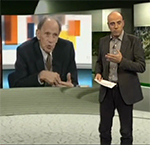
Anem amb en Salvador Sala a comprovar la puresa de les aigües dels llacs i rius d’alta muntanya
TV3 reporter Salvador Sala accompanied a LOOP's team right to the middle of lake Redon, where the scientists run tests to assess the pollution levels. Levels that one would not a priori suspect in these apparently pristine paradises. Report at minutes 0:56-1:30 (intro) and 5:10-12:30 (main footage).
- Segre
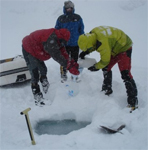
Un lago de Aran, en un estudio del padre del genoma humano. Millones de bacterias viajan a California
The Sorcerer II made a stop in Barcelona's harbour in its cruise aroud the world collecting DNA to sequence the genome of the oceans. During the pause, some researchers from the Craig Venter Institute made a tour on land to collect also samples from freshwater ecosystems in collaboration with local scientists. Among other places they visited Lake Redon.
- El Periódico de Catalunya
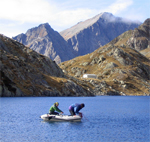
Trobades restes radioactives i de metalls als llacs del Pirineu
A report on the levels of pollutants in lakes and rivers of Catalunya elaborated by scientists of the CSIC, the University of Barcelona (UB) and the Autonomous University of Barcelona (UAB) for the Department of Environment of the Generalitat de Catalunya revealed that the sediments of lakes in the Pyrenees contain metals and radionuclides of human origin. Majors of several towns in the area have expressed concern and urged a meeting with the Head of the Department of Environment.

- Aué
Era UB premanís un projècte tà estudiar 5 estanhs deth Pirenèu
The EMERGE project, in which LOOP participated, ended. EMERGE was funded by the European Commission, and among other objectives, it aimed to investigate the impact of airborne pollutants on alpine lakes. Sediments from over 390 lakes in all european ranges showed the extent of pollution by metals and organic chemicals in high mountains. An agreement between the Conselh Generau d'Aran and the University of Barcelona has been signed to monitor the impacts of the works of the new tunnel of Vielha on the Nere and Conangles streams.
- CONTINUE EXPLORING LOOP SCOPE
RESEARCH
We integrate long-term monitoring, experimental approaches, and modelling to advance the understanding of high-mountain freshwater ecosystems.
OUTREACH
We communicate our research through scientific publications, public-oriented research stories, and collaborations with the media.
DATA
We provide access to our long-term datasets from high-mountain freshwater ecosystems through our interactive visualization portal.