
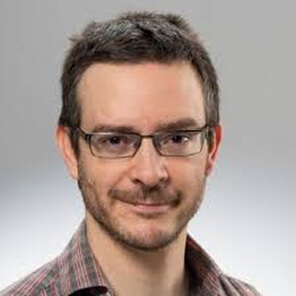
Carlos Palacín is an ecosystem biogeochemist and limnologist whose research focuses on the functioning of freshwater ecosystems in high-mountain and boreal regions. His work investigates how human and climate-driven changes—such as atmospheric nitrogen deposition, land-use alterations, and shifts in hydrological regimes—affect nutrient and carbon cycling in remote lakes and catchments. He is particularly interested in nitrogen transformation processes in lake sediments, including denitrification and dissimilatory nitrate reduction to ammonium (DNRA), and in understanding how microbial communities mediate these key ecosystem functions under varying environmental conditions.
His broader research integrates limnology, microbial ecology, and biogeochemistry to explore ecosystem responses to global change across multiple spatial and temporal scales. He also contributes to studies on lake “browning” and the implications of altered dissolved organic matter dynamics in northern lakes. Through the combination of fieldwork, experimental approaches, and molecular and geochemical techniques, his work aims to improve our understanding of the mechanisms controlling freshwater ecosystem resilience in a rapidly changing world.